
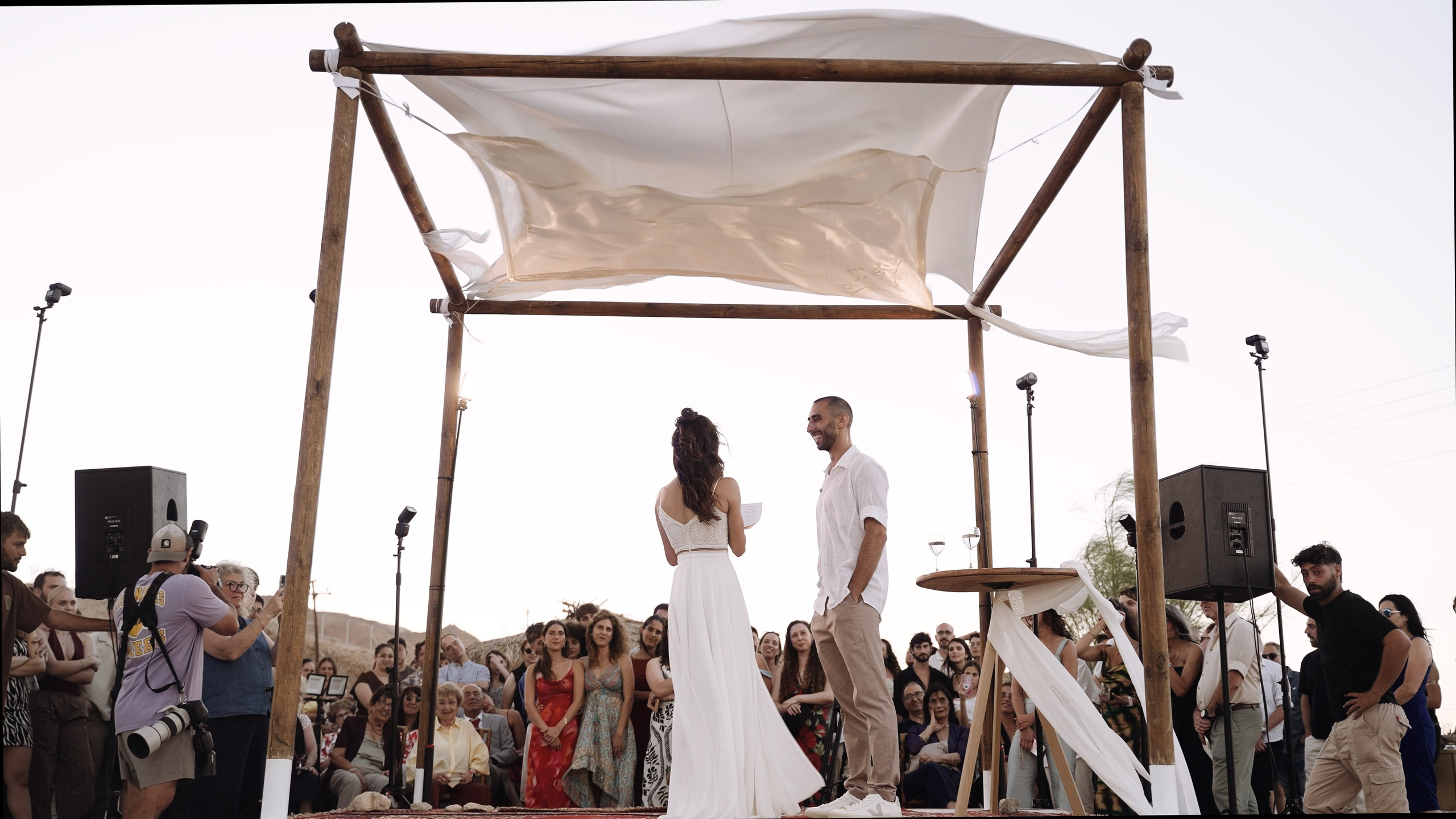
Most couples choose a wedding videographer the same way: they look at three Instagram reels, compare prices, and pick whoever felt warmest on the phone. It works often enough. But the reel is the easiest part of the job to fake, and the price only tells you what you are paying, not what you are getting.
I have filmed over 1,500 events in Israel and edited more than 2,500 wedding films, including a large amount of footage shot by other videographers. That gap between the two numbers is the useful part. I have sat in an edit suite with thousands of hours of other people’s wedding footage and seen exactly where a day goes wrong and where it gets saved. This is what I would look for if I were hiring.
Ask to see one full film, not a highlight reel
This is the single most revealing request you can make.
A three minute highlight reel is a sizzle edit. It is the best four seconds of every hour, cut to music, and almost anyone with a decent camera can assemble one. A full film is 30 to 70 minutes of your actual day, and it exposes everything the reel hides: whether the audio is usable, whether the ceremony was covered from the right angles, whether the speeches are intelligible, whether the camera was in the right place when your mother started crying.
If a videographer cannot show you a full film from a real wedding, or only offers reels, that is your answer. Ask for a recent one, not the single showpiece from four years ago.
Understand what you are actually buying
There are three different products sold under the same words, and confusing them is where most disappointment comes from.
The social cut. Sixty to ninety seconds, vertical, made to post within a week. Great for momentum, worthless as a record of the day.
The highlight film. Four to eight minutes, music driven, emotionally condensed. This is what most couples picture when they say “wedding video.”
The full film. Thirty to seventy minutes. Ceremony in full, speeches in full, the real structure of the day. This is the one you watch in ten years, and the one your parents watch more than you do.
Most good packages include a highlight film. The full film is usually what separates the tiers. Decide which one actually matters to you before you compare quotes, because two quotes that look identical can deliver completely different things. I wrote a full breakdown of what drives the price in how much a wedding video costs in Israel.
Ask how many people are shooting, and what each one does
One camera covers one angle. That sounds obvious until the chuppah, where the officiant’s back is to one side of the room, the ring exchange happens in a two second window, and your grandmother’s face during the blessing is happening twelve meters away from all of it.
A two videographer crew is not double the footage. It is coverage of moments that physically cannot be filmed from one position. During the ceremony one camera holds the wide, the other works faces. During speeches one holds the speaker, the other catches the reaction. You only notice the difference in the edit, which is exactly when it is too late to fix.
Ask directly: how many cameras are rolling during the ceremony, and where is each one standing?
Ask about sound
Sound is the most neglected part of wedding video in Israel and the most common reason a film is unwatchable.
Your vows, the speeches, the rabbi, the toast from your brother who never speaks in public. None of that survives on a camera microphone in a room with a band. It needs dedicated recorders, lav mics on the groom and the officiant, and a feed from the sound desk where one exists.
If sound does not come up in the conversation, raise it. The answer tells you a lot.
Match the style to your day, not to the showreel
Israeli weddings are not one thing. A garden wedding in the Galilee, a Jerusalem ceremony with 400 guests, a small destination wedding at a Tel Aviv rooftop, and a religious wedding with separate dancing all demand different approaches to filming.
Look for work shot in a setting close to yours. A videographer whose portfolio is entirely golden hour vineyard weddings may struggle in a dark hall at 23:00 with a live band and strobes. Ask specifically whether they have filmed at your venue, or one like it.
Ask about delivery time, and get it in writing
This is where a lot of goodwill dies. Wedding films take months to edit properly, and any videographer promising a full film in two weeks is either cutting corners or has nothing else booked.
Realistic in Israel is 60 to 90 days for a full film, often with a short social cut delivered earlier. What matters is that the number is stated clearly in the contract rather than left vague. Ask what happens if they miss it.
Book earlier than you think you need to
Good videographers in Israel are booked roughly a year ahead, and the peak dates in spring and autumn go first. If your date is set, the shortlist you can actually hire from shrinks fast.
If your preferred videographer is taken, ask who they would recommend. People who take the work seriously know who else does.
The five questions worth asking every single one
- Can I watch one full film from a recent wedding, start to finish?
- How many cameras are rolling during the ceremony, and where does each one stand?
- How is the ceremony and speech audio recorded?
- What exactly is delivered, and when?
- Who is actually filming my wedding, you or someone else from your team?
That last one catches more problems than the other four combined.
Frequently asked questions
How much does a wedding videographer cost in Israel?
Budget solo shooters start around 4,000 to 5,000 NIS. The middle of the market sits near 7,000 NIS for full day coverage, and a two videographer crew with a long film runs to around 12,000 NIS. Full breakdown here: wedding video prices in Israel.
How far in advance should I book a wedding videographer in Israel?
About a year ahead for popular dates. Spring and autumn Saturdays go first.
Do I need both a photographer and a videographer?
They record different things. Photography gives you the images you hang on a wall. Video gives you voices, movement, and the sound of the room. Couples who skip video most often regret not having their grandparents' voices.
How long does it take to get the wedding film?
Between 60 and 90 days for a properly edited full film. Short social cuts can come earlier.
What is the difference between a wedding film and a highlight reel?
A highlight reel is a short music driven edit of the best moments. A full wedding film runs 30 to 70 minutes and includes the ceremony and speeches in full.
If you are planning a wedding in Israel and want to see what a full film actually looks like, watch the films here, or get in touch with your date and I will tell you honestly whether I am the right fit for it.
